Used-Car Buying Checklist for First-Time Shoppers: What to Inspect Before You Buy
A practical guide to comparing used vehicles, checking their condition, reviewing paperwork, and avoiding expensive buying mistakes.
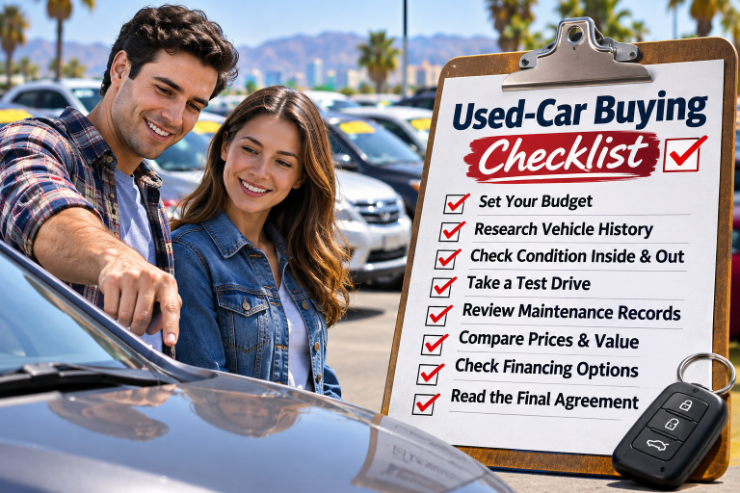
Buying your first vehicle is exciting, but preparation matters. This used-car buying checklist for first-time shoppers helps you compare vehicles, spot warning signs, and make a confident purchase.
Start With Your Budget
Set a realistic spending limit that includes sales tax, registration, insurance, fuel, and maintenance. If financing, compare loan offers and calculate the total cost, not just the monthly payment.
Research Before Visiting
Compare asking prices for similar models, years, mileage, and condition. Check reliability information, ownership costs, and available vehicle history reports.
Inspect the Vehicle
Look for uneven tire wear, rust, fluid leaks, damaged lights, and mismatched paint. Inside, test the air conditioning, windows, seat belts, electronics, and dashboard warning lights.
Take a Thorough Test Drive
Drive on different roads when practical. Notice unusual noises, vibrations, steering problems, braking issues, and transmission hesitation.
Verify the Paperwork
Match the vehicle identification number (VIN) to the documents. Review the title, service records, recall status, and any required disclosures. Check for liens or salvage branding.
Get an Independent Inspection
Have a qualified mechanic inspect the vehicle before purchase. A history report cannot replace a hands-on inspection.
Review Before Signing
Confirm the final price, fees, warranty terms, and financing details in writing. Never rush into signing paperwork you do not understand.