How to Compare Mileage and Vehicle Age When Buying a Used Car
Learn how mileage, vehicle age, maintenance history, and driving conditions affect used-car reliability and long-term value.
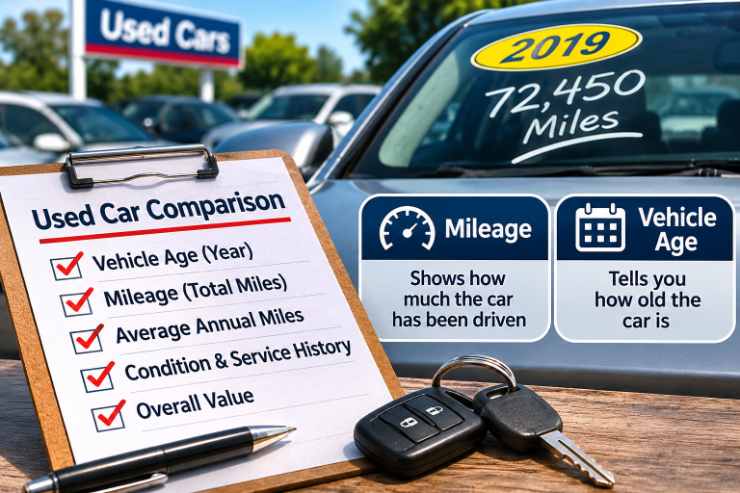
How to compare mileage and vehicle age is an important question when shopping for a reliable used car. A newer vehicle with high mileage may be a better purchase than an older vehicle with fewer miles, depending on maintenance, driving conditions, and overall condition.
Understanding Average Mileage
Many shoppers use 12,000 to 15,000 miles per year as a rough comparison benchmark. A five-year-old vehicle with 60,000 miles falls within that range. However, mileage alone cannot reveal how carefully a vehicle was driven or maintained.
When Vehicle Age Matters
Age affects components even when a car is rarely driven. Rubber seals, tires, hoses, batteries, and fluids can deteriorate over time. Older vehicles may also lack newer safety features and technology.
High Mileage Versus Low Mileage
Highway driving often produces less stop-and-go wear than city driving. A well-maintained vehicle with 100,000 miles may offer better value than a neglected vehicle with 40,000 miles. Extremely low mileage on an older car can also indicate long periods of inactivity.
What Buyers Should Check
Review maintenance records, accident history, title information, and reported odometer readings. Inspect tires, brakes, suspension, and fluid condition. Arrange an independent mechanic's inspection before purchasing.
Making the Best Decision
Compare similar models by price, condition, service history, and expected repair costs. The best used car is not necessarily the newest or lowest-mileage option. It is the vehicle offering dependable condition and reasonable ownership costs.