How to Research Vehicle Reliability Before Buying a Used Car
Learn how to compare reliability ratings, repair histories, recalls, and maintenance records to choose a dependable used vehicle.
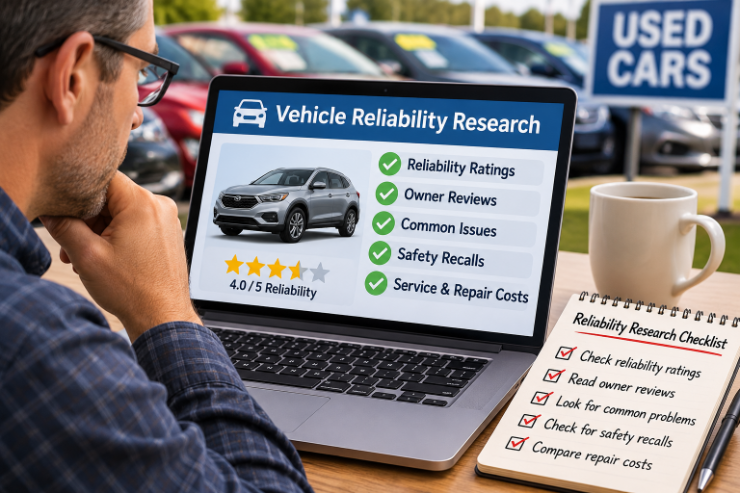
Learning how to research vehicle reliability can help used-car shoppers avoid costly surprises. A dependable model is a good starting point, but its maintenance history and current condition matter just as much.
Compare Exact Model Years
Research the specific year, engine, and transmission rather than relying on a brand's reputation. Compare owner surveys, professional reliability ratings, and recurring repair complaints. Look for patterns across multiple sources, not isolated reviews.
Check Recalls and History
Use NHTSA.gov/recalls to search for open safety recalls by vehicle identification number (VIN). Review complaints for recurring issues, remembering that complaints alone do not prove a defect. Obtain a vehicle history report to check available title, accident, and mileage information.
Study Maintenance and Repair Costs
Request service receipts and compare them with the manufacturer's maintenance schedule. Research common repairs, parts prices, and whether major scheduled services are approaching. Missing records deserve closer investigation.
Inspect Before Committing
Arrange an independent pre-purchase inspection and request a written estimate for needed repairs. A clean history report cannot confirm mechanical health. Combine model research, records, a test drive, and inspection findings before deciding whether the asking price makes sense.