Choosing a Used Car for Commuting: A Practical Buyer's Guide
Learn how to compare fuel economy, reliability, safety, comfort, and ownership costs when shopping for a dependable daily commuter.
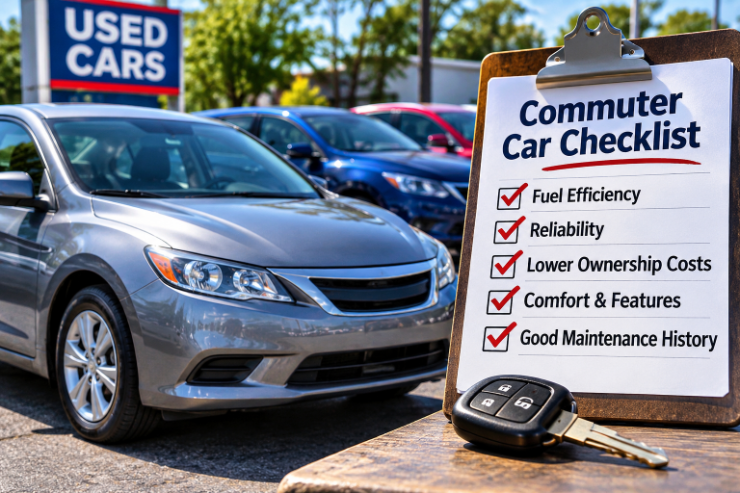
Choosing a used car for commuting starts with understanding your daily drive. A dependable vehicle should fit your budget, handle your route comfortably, and keep ongoing expenses manageable.
Start by estimating weekly mileage and noting whether your trip involves stop-and-go traffic, highways, steep grades, or limited parking. A compact sedan may be practical for city driving, while a hatchback can add cargo flexibility. Test the vehicle on roads similar to your commute.
Compare fuel economy using EPA estimates at FuelEconomy.gov, but remember actual results depend on traffic, weather, maintenance, and driving habits. Calculate fuel costs alongside insurance, registration, tires, and expected repairs rather than focusing only on the purchase price.
Check safety features that matter on repeated trips, including automatic emergency braking, blind-spot alerts, and good visibility. Verify equipment on the specific vehicle, since features vary by model year and trim. Review crash-test information from NHTSA and IIHS.
Before buying, examine the vehicle history, check for open recalls using its VIN, and arrange an independent pre-purchase inspection. Ask for maintenance records and look closely at brakes, tires, air conditioning, and signs of fluid leaks.
Finally, spend enough time in the driver's seat to assess comfort, noise, seat support, and phone connectivity. The best commuter car is not necessarily the cheapest listing; it is one you can afford to operate reliably every workday.