Tips for Evaluating Dealership Listings Before Buying a Used Car
Learn how to compare used car dealership listings, identify warning signs, and make smarter purchasing decisions.
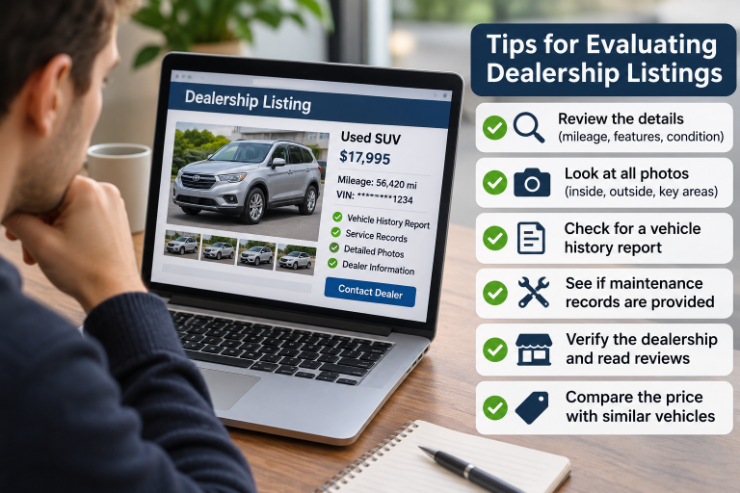
Tips for evaluating dealership listings begin with checking whether an advertised vehicle matches your needs, budget, and expectations. A low price alone does not make a used car a good deal.
Compare the basics. Record the year, make, model, trim, mileage, VIN, features, and asking price. Compare similar vehicles with comparable mileage and equipment. Watch for missing details, vague descriptions, or photos that hide damage.
Study the photos. Look for uneven body panels, worn tires, interior stains, and dashboard warning lights. Request recent pictures and ask whether the vehicle is still available before traveling to the dealership.
Check the history. Use the VIN to obtain a vehicle history report and look for title problems, reported accidents, and mileage inconsistencies. Check for open safety recalls through NHTSA. Remember that a clean report cannot prove a car is mechanically sound.
Confirm the real cost. Ask for the written out-the-door price, including applicable taxes, government charges, and dealer fees. Question unwanted add-ons and financing conditions. Review the FTC Buyers Guide to learn whether the car comes with a warranty or is sold as is.
Inspect before committing. Arrange a test drive and an independent mechanic's inspection. Compare the inspection findings with the listing and request repair estimates.
The best dealership listing is transparent, verifiable, and supported by a fair total price. Research first, ask questions, and walk away when important answers remain unclear.