Understanding Used Car Vehicle History Reports: What Every Buyer Should Check
Learn how to read vehicle history reports, recognize warning signs, and make smarter decisions before purchasing a used car.
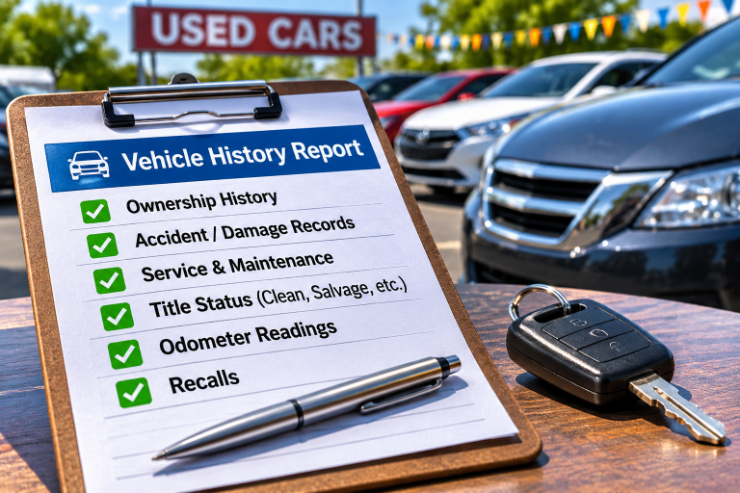
Understanding used car vehicle history reports helps buyers spot warning signs before spending money. A report uses a vehicle identification number (VIN) to summarize records that may affect safety, value, and ownership.
Start by matching the VIN on the dashboard, door label, title, and report. Look for title brands such as salvage, rebuilt, or flood. Review reported odometer readings in date order; an unexplained decrease deserves investigation. Check for insurance total-loss records and changes in the state where the vehicle was titled.
Some commercial reports also show reported accidents, service visits, and ownership changes. But missing entries do not prove a car was never damaged. Repairs paid for privately, unreported crashes, and recent events may not appear.
For title and salvage information, choose an approved provider through the National Motor Vehicle Title Information System at vehiclehistory.gov. Compare its findings with any commercial report offered by the seller. Ask for maintenance receipts and an explanation of discrepancies.
Before buying, check the VIN for open safety recalls at NHTSA.gov/recalls. Arrange an independent mechanic's inspection, even if the history looks clean. Request a written estimate for needed repairs and factor it into your offer.
A vehicle history report is a screening tool, not a guarantee. Combining records, seller answers, a test drive, and a professional inspection gives you a stronger basis for deciding whether to buy.